For years, we’ve been taught that boundaries are about other people.
What we’ll tolerate.
What we’ll accept.
What we’ll “allow.”
But here’s the uncomfortable truth most boundary conversations never touch:
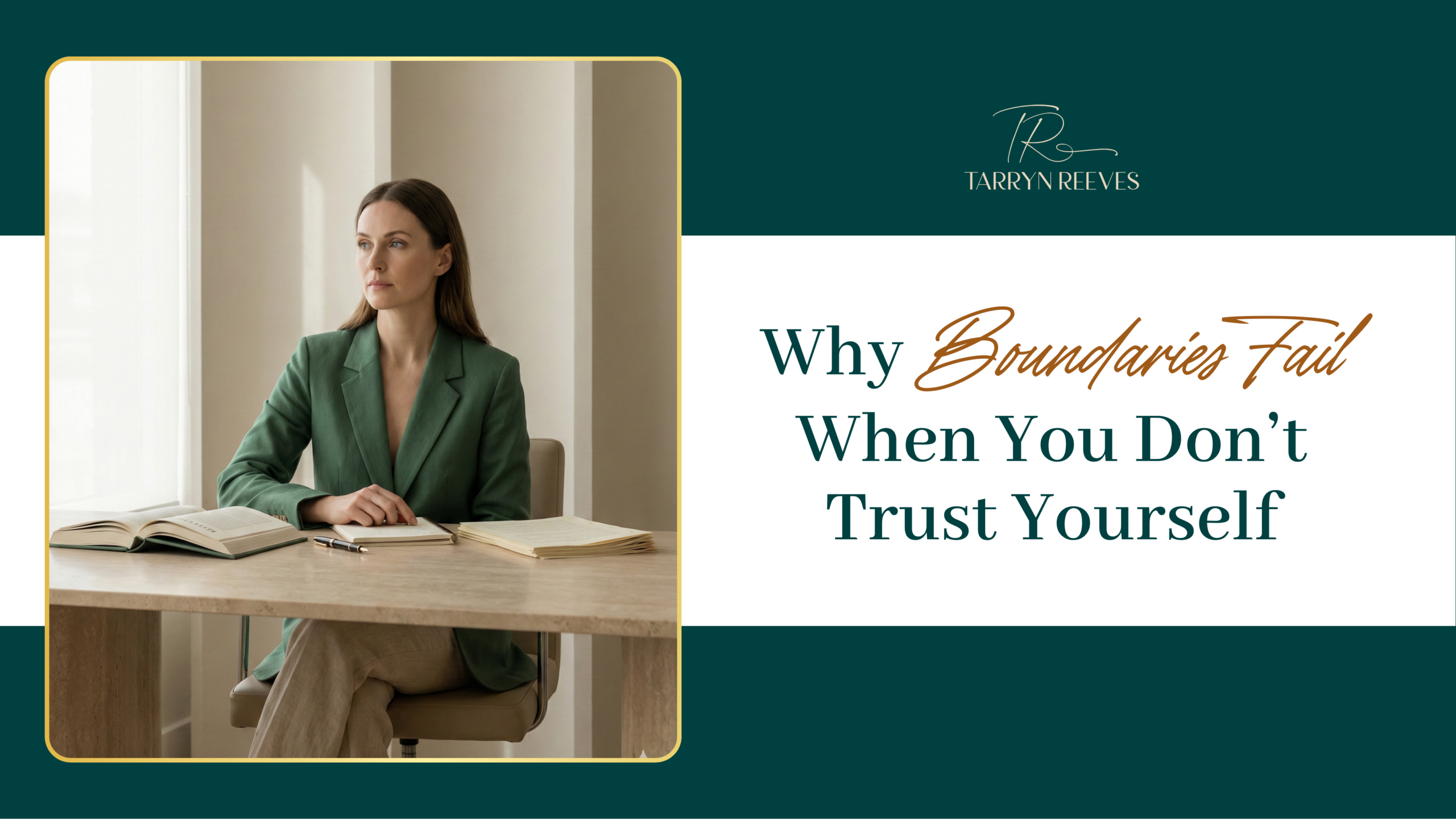
Boundaries don’t fail because people ignore them.
They fail because we don’t trust ourselves enough to uphold them.
That realisation landed hard for me during a recent conversation on the podcast, not because it was new information, but because it named something so many of us feel and can’t articulate.
If you’ve ever set a boundary and then immediately broken it yourself…
If you’ve ever said “I’m done” and then answered the call anyway…
If you’ve ever walked away from something toxic only to feel worse, not better…
This is for you.
The Boundary Myth: Why Typical Advice Doesn’t Work
Most boundary advice sounds good on paper.
“Tell people how to treat you.”
“Communicate your needs.”
“Just say no.”
But here’s what actually happens in real life:
You tell someone not to call after 9 pm.
They call anyway.
You answer.
And then you feel annoyed… not just at them, but at yourself.
So you tighten the boundary.
You explain it again.
You justify it.
And still… you answer.
At some point, you start wondering whether boundaries even work.
They do.
Just not the way we’ve been taught.
Boundaries Aren’t for Other People, They’re for You
Here’s the reframe that changes everything:
Boundaries aren’t rules for other people.
They’re commitments you make to yourself.
Other people don’t wake up thinking about your boundaries.
They’re busy thinking about their own lives, needs, and habits.
Some will forget.
Some will push.
Some will test.
Some will ignore them entirely.
That’s not the failure.
The failure happens when you override yourself in the moment, because it feels safer, easier, or more familiar than holding the line.
And that’s not a discipline issue.
It’s a self-trust issue.
Self-Trust: The Real Foundation of Strong Boundaries
People who struggle with boundaries aren’t weak.
They’re often:
- Highly capable
- Emotionally intelligent
- Empathetic
- Responsible
- Used to carrying more than their share
In other words, they’re people who learned early that keeping the peace mattered more than keeping themselves.
If you’ve lived in environments where:
- Love was conditional
- Conflict felt dangerous
- Your feelings were minimised
- Your reality was questioned
You didn’t lose self-trust overnight.
It was eroded… slowly, subtly, and often under the disguise of care.
Which brings us to gaslighting.
Gaslighting and the Collapse of Internal Authority
Gaslighting doesn’t start with control.
It starts with doubt.
Not loud, obvious doubt… quiet, creeping doubt.
Doubt about:
- What you saw
- What you heard
- What you felt
- What you knew
Over time, the internal question becomes:
“Maybe I’m wrong.”
And once you stop trusting your own perception, something dangerous happens:
Your authority moves outside yourself.
You look to others to validate:
- Your feelings
- Your decisions
- Your boundaries
That’s why boundary work cannot be separated from self-trust.
If you don’t believe your feelings are valid…
If you don’t trust your instincts…
If you’ve been taught that your reactions are the problem…
No amount of scripts or strategies will stick.
Leaving Isn’t the End. It’s the Beginning of Rebuilding Authority
One of the most overlooked truths about toxic dynamics is this:
Leaving is often easier than what comes after.
Walking away requires courage.
Healing requires identity reconstruction.
After you leave, the voices don’t magically disappear.
They move inside your head.
The self-doubt.
The anxiety.
The “maybe it was my fault.”
The fear of getting it wrong again.
This is where many people spiral, not because they made the wrong decision, but because they were never taught how to rebuild internal authority after it was dismantled.
Which is why so many people leave one toxic situation only to end up in another.
The environment changes.
The pattern doesn’t.
Boundaries as Leadership: Internal Authority First
Here’s where I want to be very clear:
This isn’t just about relationships.
This is about leadership.
If you can’t trust yourself:
- You over-explain
- You second-guess decisions
- You defer authority
- You tolerate misalignment longer than you should
Strong boundaries aren’t rigid.
They’re grounded.
They come from knowing:
“I can handle the discomfort of holding this line.”
Not because you’re cold.
Not because you’re confrontational.
But because you finally trust yourself more than you fear other people’s reactions.
That’s leadership… internally first, externally second.
How to Rebuild Self-Trust (Where Boundaries Actually Begin)
Self-trust isn’t built through affirmations.
It’s built through follow-through.
Small moments where you:
- Pause before responding
- Honour your no
- Sit with discomfort instead of escaping it
- Choose alignment over approval
Every time you override yourself, you teach your nervous system:
“My needs aren’t safe here.”
Every time you honour yourself, even quietly, you teach it:
“I’ve got me.”
That’s how boundaries stop feeling like conflict and start feeling like self-respect.
If This Is Landing for You
If this piece is stirring something, let it.
You don’t need to fix everything today.
You don’t need to confront anyone.
You don’t need to explain yourself.
Start here:
Where have you been crossing your own boundaries?
Not where others are pushing.
Where you are abandoning yourself.
That’s the work.
And it’s powerful.
I explored this conversation more deeply in a recent episode of the podcast, not as advice, but as an honest unpacking of what boundaries really are when we strip away the buzzwords.
Listen if it feels supportive.
Leave it if it doesn’t.
Either way, trust what you feel.
That’s where your authority lives.
—
Write your story.
Lead your legacy.
Frequently Asked Questions About Boundaries and Self-Trust
Q: Why do boundaries fail for so many people?
A: Boundaries often fail not because others ignore them, but because we override them ourselves due to a lack of self-trust.
Q: How can I rebuild self-trust after leaving a toxic relationship?
A: Start with small acts of self-honouring and consistent follow-through. Each time you uphold a boundary, you reinforce your internal authority.
Q: What’s the link between gaslighting and boundaries?
A: Gaslighting erodes your internal authority, making it harder to trust your perceptions and enforce boundaries.
Q: Are boundaries about controlling others?
A: No, boundaries are about making and keeping commitments to yourself, regardless of others’ reactions.